
Business Process Reengineering: How to Optimize for Digital Growth

In today’s fast-changing digital world, sticking to outdated workflows and fragmented systems can silently hold your business back. That’s where Business Process Reengineering (BPR) comes in — a powerful strategy that helps companies completely rethink and redesign their core operations for better speed, agility, and growth.
At its core, BPR is about more than just tweaking a few steps. It’s about going back to the drawing board, identifying what’s slowing you down, and rebuilding your business processes to align with the needs of the digital era.
For growing businesses looking to scale efficiently or enterprises aiming to modernize legacy systems, reengineering business operations is not just an option — it’s essential.
In this article, we’ll guide you through what business process reengineering is, why it matters for digital transformation, and how you can implement it to optimize your business for long-term success.
What Is Business Process Reengineering?
A Fresh Look at Old Processes
Business Process Reengineering (BPR) is the act of radically rethinking and redesigning core business processes to achieve major improvements in performance, efficiency, and output. Unlike basic process tweaks, BPR dives deep to rebuild processes from the ground up.
BPR vs Traditional Process Improvement
- Traditional approach: Makes small, gradual improvements
- BPR approach: Reinvents entire workflows for digital scalability and speed
- Goal: Not just to work better—but work differently with digital transformation in mind
Why It’s Relevant Today
With rising competition, digital disruption, and customer expectations, businesses can’t afford to rely on outdated systems. BPR for digital growth helps organizations:
- Break departmental silos
- Replace legacy systems
- Embrace digital tools and automation
- Deliver better, faster customer experiences
Technology Is at the Heart of Modern BPR
Today, BPR is powered by:
- Workflow automation platforms like Zapier, Kissflow, or Make
- Robotic Process Automation (RPA) tools like UiPath
- AI-driven analytics for smarter decisions
- Cloud-based systems for real-time access and scalability
Modern business process reengineering isn’t just about cost-cutting—it’s about future-proofing your operations for agility, innovation, and growth.
Why BPR Matters for Digital Transformation
In a digital-first economy, businesses must operate faster, smarter, and more efficiently than ever before. This is exactly where Business Process Reengineering (BPR) plays a vital role—it serves as the backbone of digital transformation initiatives.
The Problem with Traditional Processes
Many organizations still face challenges like:
- Manual, repetitive tasks
- Fragmented systems and data silos
- Long turnaround times
- Poor cross-team collaboration
- Outdated legacy tools that don’t scale
These issues directly affect customer experience, team productivity, and long-term competitiveness.
How BPR Drives Digital Growth
Implementing BPR allows businesses to align their operations with modern digital goals. Here’s how it fuels growth:
- Streamlines operations
By eliminating unnecessary steps and automating workflows, BPR simplifies day-to-day operations. - Enables end-to-end automation
Integrated systems lead to faster decision-making and seamless collaboration across departments. - Improves customer experience
Faster service delivery and personalized interactions are possible when your backend systems work smoothly. - Reduces operational costs
BPR helps cut down on redundant roles, time wastage, and IT maintenance expenses. - Supports agility and innovation
Digital transformation requires speed. BPR gives you the flexibility to adapt quickly in a competitive market.
The Link Between BPR and Technology
Modern BPR for digital transformation depends heavily on technology. Platforms like:
- ERP & CRM systems
- Cloud-based collaboration tools
- AI and data analytics engines
- Process automation tools
- Are all used to optimize business processes and deliver value faster and more efficiently.
By reengineering your business processes with a digital-first mindset, you’re not just improving operations—you’re preparing your business for long-term, scalable success.
Signs Your Business Needs Reengineering
You may not realize it, but your current processes could be holding you back from growth. Many businesses continue operating with outdated systems simply because “it’s how we’ve always done it.” But in today’s fast-moving world, that mindset can cost you time, money, and market share.
Here are clear signs it’s time to consider business process reengineering:
1. Processes Are Manual and Time-Consuming
If your team spends hours each week on repetitive tasks like data entry, approvals, or scheduling, it’s time to automate and optimize your workflows.
2. Data Is Scattered Across Multiple Platforms
Are your teams constantly switching between spreadsheets, emails, and disconnected systems? This leads to inefficiency and delays in decision-making.
Fix: Integrate systems with a digital transformation strategy that centralizes your data and enhances collaboration.
3. Long Turnaround Times for Simple Tasks
If a basic approval or customer request takes days instead of minutes, your workflow optimization needs serious attention.
4. Legacy Systems Are Slowing You Down
Old software may still function, but it often lacks flexibility, speed, and integration capabilities. Legacy system overhaul is a key step in digital reengineering.
5. Teams Work in Silos
If your departments operate independently with little data sharing, you’re likely losing efficiency and missing growth opportunities.
6. Poor Customer Experience or Delays
If customers frequently complain about delays, miscommunication, or lack of personalization, the root cause could be broken internal processes.
7. You Struggle to Scale Without Hiring More Staff
If growth means adding more people instead of improving systems, your processes aren’t built to scale. Reengineering business operations helps you grow smarter.
Recognizing these red flags is the first step. The good news? With the right business process reengineering approach, these inefficiencies can be turned into opportunities for automation, growth, and digital success.
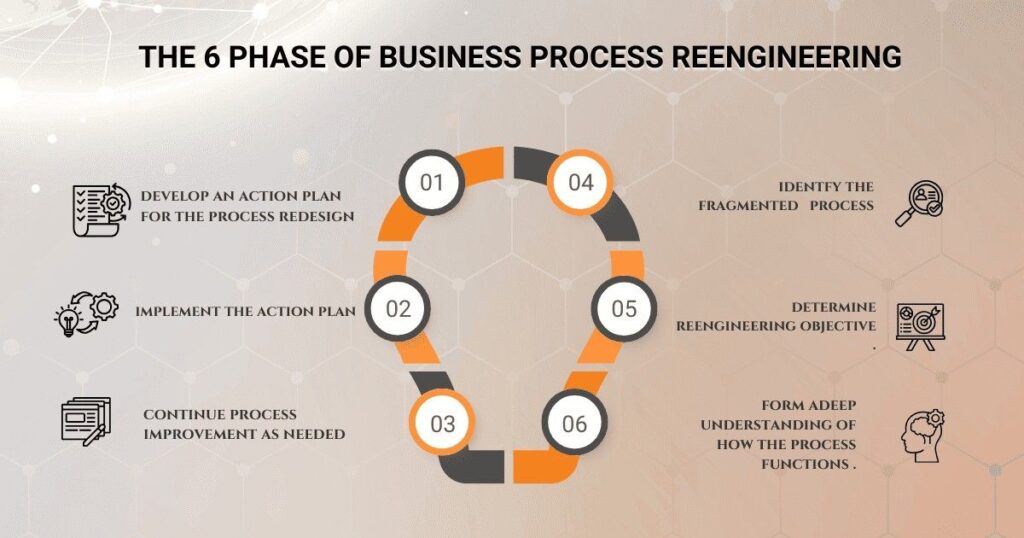
Steps to Reengineer Your Business Processes
Reengineering your business operations might sound overwhelming, but when approached strategically, it can transform your company from the inside out. Whether you’re optimizing internal workflows or preparing for full-scale digital transformation, these steps will guide your journey.
Step 1: Map Your Existing Processes
Start by documenting how your current workflows operate. Identify what tools are being used, who’s involved at each stage, and how data flows.
🎯 This helps you understand the full picture before making changes.
Step 2: Identify Bottlenecks and Pain Points
Look for inefficiencies such as delays, duplicate efforts, manual data entry, or approval bottlenecks. These are the areas where business process reengineering can have the most impact.
Step 3: Set Clear Digital Transformation Goals
Ask: What do you want to achieve—faster service delivery, better customer experience, or cost savings?
Setting clear goals helps prioritize efforts and measure ROI.
Step 4: Involve Key Stakeholders
Bring in leadership, department heads, and frontline employees to gather input.
Collaborative reengineering ensures changes are practical and widely accepted.
Step 5: Choose the Right Tools and Technology
Select tools that align with your transformation goals. This may include:
Workflow automation platforms (e.g., Zapier, Make, Kissflow)
CRM/ERP integrations
AI-powered analytics
Cloud-based communication tools
These technologies help you optimize business processes at scale.
Step 6: Redesign, Test, and Iterate
Redesign the new process using automation, data flows, and simplified steps. Test in a small department or with pilot users.
Continuous feedback is key to a smooth transition and long-term success.
Step 7: Monitor Performance and Optimize Continuously
Track KPIs like task completion time, error rate, and employee satisfaction. Make tweaks as needed to ensure ongoing improvement and alignment with your digital goals.
Implementing BPR for digital growth isn’t a one-time project—it’s a strategic shift toward long-term efficiency, agility, and innovation.
Tech Tools That Support BPR
Technology is at the heart of modern Business Process Reengineering. Without the right digital tools, even the best strategies fall flat. The goal is to enable faster, smarter, and more connected operations—without adding complexity.
Here are some of the most effective tools that support BPR for digital growth:
1. Workflow Automation Platforms
These tools help eliminate repetitive manual tasks by automating everything from approvals to notifications.
Zapier – Ideal for SMBs; integrates 6,000+ apps
Make (Integromat) – Visual builder for multi-step workflows
Kissflow – Streamlines HR, finance, and procurement workflows
Use case: Automate onboarding, lead nurturing, and internal approvals with minimal coding.
2. Robotic Process Automation (RPA)
RPA tools are great for automating rule-based, repetitive tasks at scale.
UiPath
Automation Anywhere
Blue Prism
Use case: Automate data entry, invoice processing, and backend operations using bots.
3. ERP & CRM Integrations
Modern businesses run on data. Connecting your ERP or CRM with other platforms improves data visibility and efficiency.
Salesforce + Slack + Zapier
Zoho CRM + Make
Odoo ERP
Use case: Trigger alerts, reports, or tasks when customer actions are captured in real time.
4. Cloud-Based Collaboration Tools
Collaboration platforms help teams stay aligned and act faster.
Google Workspace
Microsoft 365
Slack + integrations
Use case: Automate file sharing, meeting scheduling, and task assignments using cloud workflows.
5. AI-Powered Analytics Tools
Data plays a crucial role in optimizing business processes. These tools help make smarter, faster decisions:
Tableau
Looker (by Google Cloud)
Use case: Track process performance, identify bottlenecks, and optimize in real time.
With the right combination of tools, businesses can shift from outdated systems to agile, digital-first operations that scale effortlessly.
Common Challenges (and How to Overcome Them)
While Business Process Reengineering can deliver incredible results, the path to digital transformation isn’t always smooth. Many companies face resistance, confusion, or technical roadblocks when trying to reengineer their workflows.
Here’s a look at the most common BPR challenges—and how to overcome them:
⚠️ Challenge 1: Resistance to Change
Employees may worry that automation or process changes will make their roles obsolete or more difficult.
✅ Solution:
Communicate the benefits early. Show how BPR helps eliminate tedious work, boosts job satisfaction, and opens opportunities for growth.
⚠️ Challenge 2: Lack of Clear Goals
Jumping into process changes without defined outcomes can lead to wasted time, budget overruns, and confusion.
✅ Solution:
Start with clear digital transformation goals—such as improving turnaround time, reducing costs, or enhancing customer experience.
⚠️ Challenge 3: Choosing the Wrong Tools
With so many automation platforms and CRMs out there, it’s easy to pick one that doesn’t integrate well or is too complex for your team.
✅ Solution:
Evaluate tools based on your specific use cases. Work with experienced IT consultants like Innomax to match the right tools with your business needs.
⚠️ Challenge 4: Poor Internal Communication
When only one team is informed about BPR changes, it creates misalignment across the organization.
✅ Solution:
Involve all relevant departments. Host workshops or walkthroughs to align everyone on what’s changing and why.
⚠️ Challenge 5: No Plan for Iteration
Thinking of BPR as a one-time project can stall progress. Business environments evolve—your processes should too.
✅ Solution:
Adopt an agile business transformation mindset. Build, test, analyze, and refine your processes continuously.
Tackling these roadblocks early ensures that your reengineering efforts are smooth, cost-effective, and truly aligned with your long-term digital goals.
Conclusion
In the digital age, outdated processes can slow you down. Business Process Reengineering (BPR) offers a smart way to streamline operations, cut costs, and boost efficiency—by redesigning your workflows from the ground up.
Whether you’re aiming for faster service, better customer experience, or scalable growth, BPR is the key to real digital transformation.
At Innomax IT Solutions, we help businesses like yours reengineer operations with the right strategy and technology—ensuring you’re ready for what’s next.
FAQ’s
1: What is Business Process Reengineering (BPR)?
BPR is the radical redesign of business processes to achieve major improvements in efficiency, speed, and service. It focuses on optimizing workflows using technology.
2: How is BPR different from process improvement?
Process improvement makes small, gradual changes, while BPR completely rethinks and rebuilds processes for higher performance and digital readiness.
3: Why is BPR important for digital transformation?
BPR aligns outdated operations with modern digital goals. It helps companies automate, scale, and stay competitive in a tech-driven world.
4e the main benefits of business process reengineering?
Key benefits include reduced costs, faster turnaround times, improved customer experience, and increased operational efficiency.
5: When should a business consider reengineering its processes?
When workflows are slow, manual, or siloed—or when legacy systems limit growth—BPR can help realign operations for better results.
6: What industries can benefit from BPR?
BPR is useful across industries like IT, HR, logistics, healthcare, finance, and education—anywhere efficiency and automation matter.
7: Do small businesses need business process reengineering?
Yes. Even small teams can benefit by reducing manual work, automating tasks, and setting up scalable systems for future growth.
8: What technologies are used in modern BPR?
Workflow automation tools, robotic process automation (RPA), AI, cloud platforms, and ERP/CRM integrations support BPR today.
9: How long does a BPR project take to implement?
The timeline depends on complexity, but most small-to-mid-sized projects take 4 to 12 weeks from assessment to execution.
10: How can Innomax IT Solutions help with BPR?
Innomax offers end-to-end BPR support—from process analysis and strategy to technology implementation and continuous optimization.
