Software Development Life Cycle (SDLC) – A Complete Guide
Introduction to Software Development Life Cycle (SDLC)
The Software Development Life Cycle (SDLC) is a structured approach to software development that ensures high-quality software is built efficiently and systematically. SDLC provides a step-by-step process to develop software applications, helping teams reduce risks, improve quality, and meet project requirements.
In this comprehensive guide, we will explore the Software Development Life Cycle (SDLC) in detail, covering its phases, methodologies, benefits, and how it applies to modern software development practices, including SDLC in Agile.
By following SDLC, businesses can achieve:
✅ Better project planning and execution
✅ High-quality software development
✅ Cost-effective and efficient software releases
✅ Enhanced software security and reliability
Why is SDLC Important?
SDLC helps companies and development teams:
- Streamline the software development process
- Avoid unnecessary risks and costs
- Improve customer satisfaction with well-tested software
What is Software Development Life Cycle (SDLC)?
The Software Development Life Cycle (SDLC) is a step-by-step methodology that guides developers through the creation of a software system. SDLC ensures that the software meets customer expectations, is delivered on time, and remains cost-effective.
Key Benefits of Software Development Life Cycle (SDLC)
🔹 Provides a clear roadmap for developers
🔹 Enhances software quality and security
🔹 Reduces development risks and errors
🔹 Ensures continuous improvement and updates
Phases of the Software Development Life Cycle
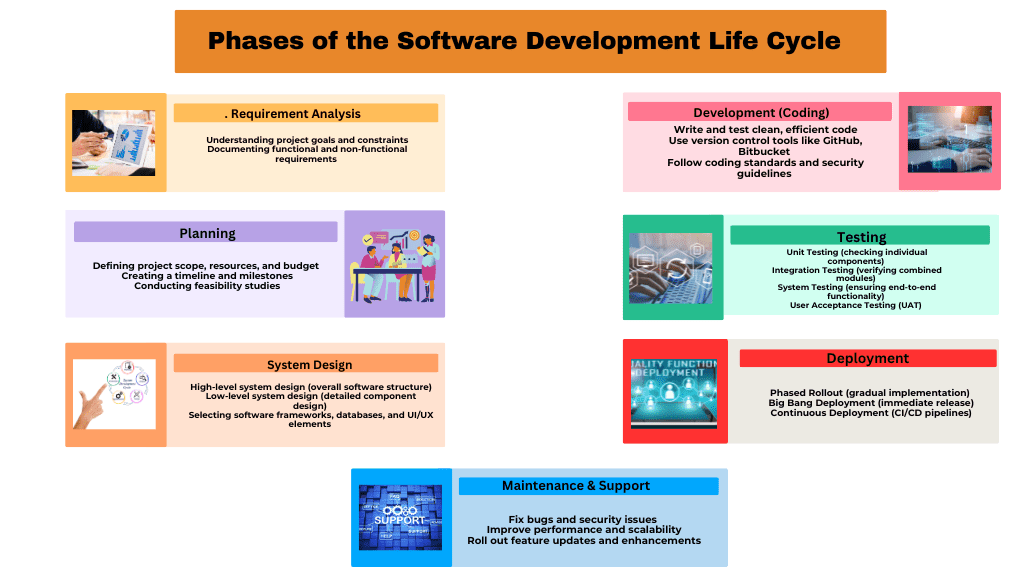
SDLC consists of seven essential phases, each playing a crucial role in software development.
1. Requirement Analysis
This phase involves gathering business and technical requirements. Key activities include:
✔ Understanding project goals and constraints
✔ Documenting functional and non-functional requirements
✔ Identifying potential risks and challenges
2. Planning
In this phase, teams create a detailed software development plan. Activities include:
✔ Defining project scope, resources, and budget
✔ Creating a timeline and milestones
✔ Conducting feasibility studies
3. System Design
This phase involves designing the software architecture. Steps include:
✔ High-level system design (overall software structure)
✔ Low-level system design (detailed component design)
✔ Selecting software frameworks, databases, and UI/UX elements
4. Development (Coding)
This is the actual software coding phase, where developers:
✔ Write and test clean, efficient code
✔ Use version control tools like GitHub, Bitbucket
✔ Follow coding standards and security guidelines
5. Testing
Before deployment, software undergoes multiple tests, including:
✔ Unit Testing (checking individual components)
✔ Integration Testing (verifying combined modules)
✔ System Testing (ensuring end-to-end functionality)
✔ User Acceptance Testing (UAT)
6. Deployment
Once tested, software is deployed to production. Deployment strategies include:
✔ Phased Rollout (gradual implementation)
✔ Big Bang Deployment (immediate release)
✔ Continuous Deployment (CI/CD pipelines)
7. Maintenance & Support
After release, software needs regular maintenance to:
✔ Fix bugs and security issues
✔ Improve performance and scalability
✔ Roll out feature updates and enhancements
Why is the SDLC Life Cycle Important?
SDLC ensures software is built systematically, efficiently, and securely. The advantages include:
✅ Minimizing project risks
✅ Reducing development costs
✅ Ensuring software meets business objectives
✅ Enhancing software security
Without SDLC, projects face risks like scope creep, budget overruns, and security vulnerabilities.
Software Development Life Cycle in Agile
Agile SDLC is a flexible and iterative approach that differs from traditional SDLC.
How Agile SDLC Works
✔ Iterative development cycles with regular feedback
✔ Frequent testing and deployment
✔ Allows quick adaptation to changes
| Aspect | Traditional SDLC | Agile SDLC |
|---|---|---|
| Approach | Linear | Iterative |
| Flexibility | Low | High |
| Risk Management | High | Low |
| Feedback Loop | End of cycle | Continuous |
Software Development Life Cycle Explained with Examples
Let’s take an example of an e-commerce website development using SDLC:
1️⃣ Requirement Analysis: Understanding business needs for an online store
2️⃣ Planning: Deciding budget, timeline, and technology stack
3️⃣ Design: Creating website wireframes and UI
4️⃣ Development: Coding the front-end and back-end
5️⃣ Testing: Checking security, payment integrations, and performance
6️⃣ Deployment: Going live with the website
7️⃣ Maintenance: Updating products, fixing bugs, improving UX
This structured approach ensures a smooth development process and user satisfaction.
SDLC Life Cycle & Its Methodologies
There are several SDLC models:
✔ Waterfall Model – Linear and sequential development process
✔ V-Model (Validation & Verification) – Testing happens in parallel with development
✔ Iterative Model – Development in repeated cycles
✔ Agile Model – Continuous feedback and flexible approach
✔ Spiral Model – Risk-based incremental development
Each model is chosen based on project complexity and requirements.
System Development Life Cycle (SDLC) in IT Projects
System Development Life Cycle (SDLC) applies to enterprise IT projects, ensuring structured system development.
Key differences between Software Development Life Cycle and System Development Life Cycle:
| Aspect | Software Development Life Cycle (SDLC) | System Development Life Cycle (SDLC) |
|---|---|---|
| Scope | Focuses on software development only | Covers the entire IT system, including hardware and software |
| Phases | Requirement analysis, design, coding, testing, deployment, and maintenance | Includes software development along with infrastructure setup, security, and data management |
| Users | Developers, testers, project managers | IT administrators, system architects, security teams |
| Example | Developing a mobile app | Implementing a new cloud-based ERP system |
Why IT Teams Use System Development Life Cycle:
- Ensures system-wide integration
- Helps maintain IT security
- Improves system performance and reliability
Common Challenges in SDLC and How to Overcome Them
Even with a structured SDLC approach, challenges arise during software development. Here are some common issues and solutions:
| Challenge | Solution |
|---|---|
| Unclear Requirements | Use detailed requirement documentation and user feedback |
| Scope Creep (Changing project scope) | Implement strict change control processes |
| Time & Budget Overruns | Use Agile methodology and project tracking tools |
| Poor Communication Between Teams | Conduct regular meetings and use collaboration tools (Jira, Slack, Trello) |
| Security Vulnerabilities | Implement secure coding practices and penetration testing |
Best Practices for Implementing SDLC Successfully
To maximize SDLC effectiveness, businesses should follow these best practices:
✅ Define Clear Requirements
- Use detailed documentation
- Gather stakeholder input early
✅ Choose the Right SDLC Model
- Use Waterfall for small projects
- Use Agile for dynamic, fast-changing projects
✅ Implement Version Control
- Use Git, Bitbucket, or GitHub for managing code changes
✅ Continuous Testing & Feedback
- Use automated testing for efficiency
- Conduct User Acceptance Testing (UAT)
✅ Ensure Security & Compliance
- Use OWASP guidelines for secure coding
- Follow GDPR, HIPAA, or industry-specific regulations
Future Trends in Software Development Life Cycle
AI-Powered Software Development
🤖 AI helps in automated testing, bug detection, and predictive analytics.
DevSecOps Integration
🔒 Security is now integrated into every stage of the SDLC process.
Low-Code & No-Code Development
💻 Reduces development time with drag-and-drop platforms.
Blockchain in SDLC
🔗 Secure decentralized applications (DApps) with blockchain technology.
Cloud-Based Development
☁️ Cloud environments like AWS, Azure, and Google Cloud streamline software development.
Conclusion
The Software Development Life Cycle (SDLC) is a critical framework for building high-quality, cost-effective, and secure software. By following the SDLC process, businesses can:
✅ Improve software reliability
✅ Reduce development costs
✅ Ensure security and compliance
✅ Enhance customer satisfaction
Whether you use the Waterfall, Agile, or DevSecOps approach, implementing the right SDLC model is key to successful software development.
Frequently Asked Questions (FAQs) About SDLC
What is SDLC in simple terms?
The Software Development Life Cycle (SDLC) is a step-by-step process used by developers to plan, create, test, and maintain software applications. SDLC ensures a structured approach to software development, improving efficiency and quality. By following the Software Development Life Cycle (SDLC), teams can minimize risks, enhance security, and deliver reliable software solutions.
What are the 7 phases of SDLC?
1️⃣ Requirement Analysis
2️⃣ Planning
3️⃣ System Design
4️⃣ Development
5️⃣ Testing
6️⃣ Deployment
7️⃣ Maintenance
Which SDLC model is best?
It depends on the project:
- Waterfall for simple, linear projects
- Agile for flexible, fast-changing projects
- Spiral for risk-heavy projects
What is the difference between SDLC and Agile?
- SDLC is a structured process for developing software.
- Agile is an iterative SDLC model that emphasizes continuous delivery and customer feedback.
Why is SDLC important in software development?
It helps reduce development risks, control costs, and ensure high-quality software.
